
La Plata County's Most Wanted Program
La Plata County publishes no searchable most-wanted roster and no online active-warrant list through the Sheriff's Office. What you will find are announcements about selected enforcement operations. Those press releases serve a purpose, but they are not an inventory of county warrants, and they never replace confirmation from the issuing court. For a real status check, the Sheriff's Office answers at 970-247-1157. The La Plata clerk can be reached at 970-247-2304. A lawyer is the right call too, since a warrant question can carry consequences that deserve private advice. Treat any third-party site claiming a full La Plata County warrant list with doubt, because no office here publishes one.
No La Plata County Most-Wanted Roster
There is no dedicated La Plata County most-wanted roster and no searchable Sheriff active-warrant database. That gap matters. Visitors sometimes mistake the Colorado Judicial docket interface, a press release, or a private website for an official list, and none of those fit. Missing a roster does not mean agencies lack internal systems. It only means the public record is thin. For a question about your own matter, call the issuing clerk, the Sheriff's Office at 970-247-1157, or counsel. Ask narrowly about your own case rather than requesting a bulk list, since a narrow request gets a reliable answer and a bulk request gets none.
How the Most Wanted Lists Work
Most-wanted notices are curated, not comprehensive. An agency picks a handful of matters for an operational reason, and the notice can change after an arrest, a surrender, a court recall, or a new charging decision. La Plata County posts no full roster and sets no update schedule. So an older release may no longer reflect reality. Assume nothing is current until the issuing court says so.
Note: A public release is a snapshot. Inclusion does not replace court confirmation, and absence from a selective notice is never proof that no warrant exists.
La Plata County Warrant Operation Context
For a sense of how enforcement works here, an April 2026 U.S. Marshals Service release describes a joint La Plata County fugitive operation. The Colorado Violent Offender Task Force took part, along with deputized local task-force officers and the Marshals' Special Operations Group. La Plata County Sheriff personnel joined, and Durango Police and Durango Fire supported the effort. The release is context, not a search tool. It names no one you can look up, and no names, photographs, addresses, or case details belong here. The value is the map it draws: federal and local teams can coordinate on shared priorities, while each warrant stays tied to the court that issued it.
Reporting a Tip Safely
The one documented federal tip route is the U.S. Marshals Service tips channel. It exists to pass information to that agency. It cannot tell a caller whether a county warrant is outstanding. La Plata County has no Crime Stoppers reward program on record either. So promise yourself nothing about anonymity or payment.
- Use the official channel identified in the current agency communication.
- Provide concise first-hand information and follow the form instructions.
- Never approach, follow, restrain, or try to detain anyone.
- Use 911 for emergencies and the published non-emergency route otherwise.
Key Point: A public release is a snapshot. Inclusion does not replace court confirmation, and absence from a selective notice is never proof that no warrant exists.
COVOTF Is Not a La Plata Warrant Search
The Colorado Violent Offender Task Force works statewide and nationwide when an operation calls for it. None of that makes a task-force announcement a La Plata warrant-status database. An operation summary cannot tell you a warrant is active, whether a court recalled it, what the bond terms are, or that no other warrant exists. County and district status sits with the La Plata clerk. Municipal matters belong to Durango, Bayfield, or Ignacio Municipal Court. Federal case questions go to the District of Colorado and PACER. Jurisdiction, not publicity, sets the route. The Colorado Judicial Branch court hierarchy shows how each level of court fits, and why the issuing court stays central to any status check in La Plata County.
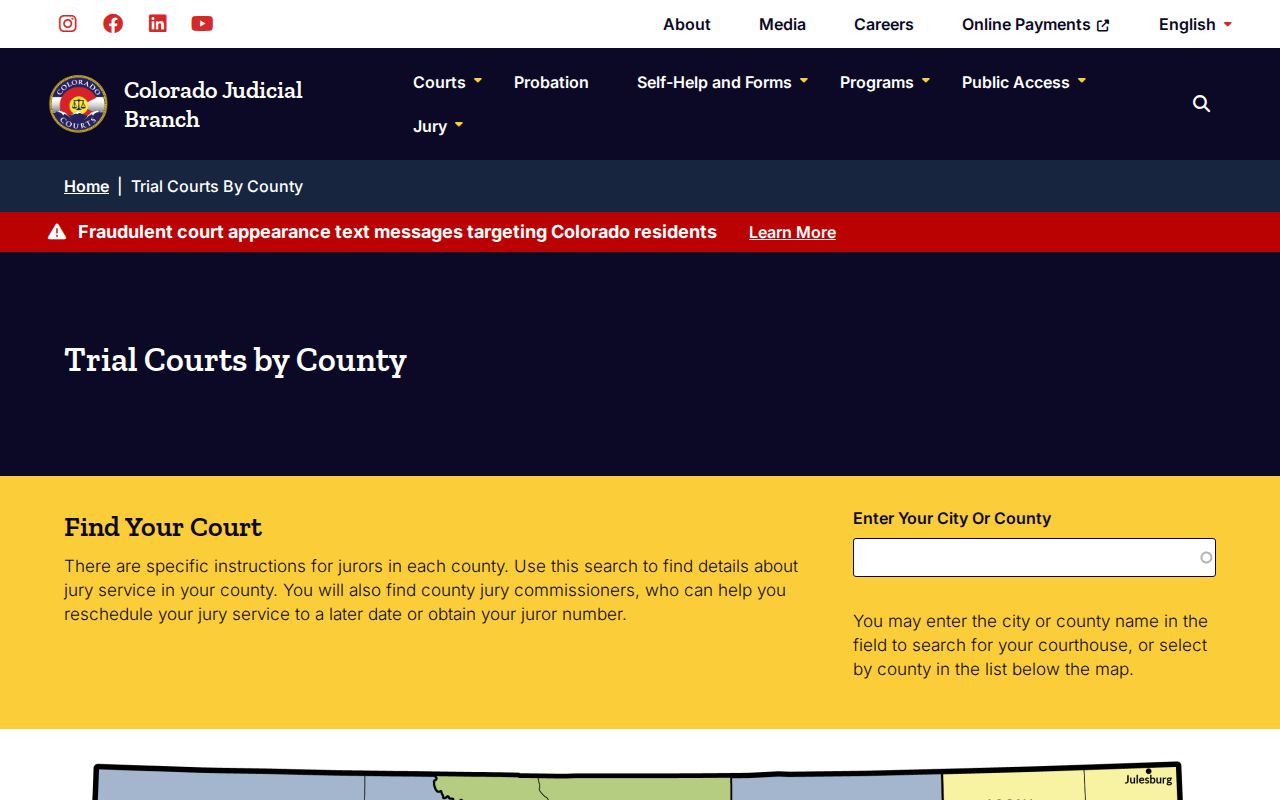
The court-level distinctions all point one way. A task-force release cannot replace the record kept by the court that issued a La Plata County warrant.
Most Wanted vs an Active Warrant
A most-wanted notice is a selective public message. An active warrant is a judicial order from a court. Most warrants never appear in any release. An old announcement can also linger online after circumstances change. Active, recalled, served, resolved: those terms mean whatever the issuing court says they mean.
| Feature | Most Wanted List | Active Warrant |
|---|---|---|
| Scope | [curated high-priority subset] | [any unserved warrant] |
| Who publishes it | [sheriff / Crime Stoppers] | [issuing court / sheriff records] |
| Public visibility | [names and photos published] | [searched by name / DOB, if public] |
| How to resolve | [surrender or arrest] | [surrender, bond, or motion to recall] |
La Plata Warrant Tips Are Not Status Checks
The U.S. Marshals tips page is the official channel for information useful to that agency. It is not the place to ask whether you have a local warrant. La Plata County has no Crime Stoppers program with documented anonymity or reward terms, so count on neither. Follow the channel's instructions and share only what you actually know. Do not approach or watch anyone yourself. When the worry is your own status, a lawyer and the issuing court offer the private, case-specific route a tips form never will.
If You Think You Are on a List
If the worry is your own warrant, skip the tips form and the news release. Find the issuing venue from your citation, summons, case number, or prior notice. Then call a lawyer and the right clerk. Ask whether the next step is a scheduled appearance, a recall motion, bond, or a coordinated surrender before you travel anywhere.
Important: [15-30 word callout - consult an attorney before acting; do not approach the agency alone; an attorney can confirm the warrant and arrange a voluntary surrender and bond on your terms.]
Why a La Plata Warrant List Proves Nothing
A most-wanted posting is a choice, not an inventory. Any list an agency puts out covers only the cases it picked for that notice, leaving out municipal bench warrants, missed settings, traffic warrants, and more. Timing bites too. Service, surrender, recall, and online updates rarely move together. Colorado Judicial Docket Search can find a hearing but has no stable active-warrant field, so a blank result proves nothing. In La Plata County, ask the issuing court for current status, and get written confirmation once the matter resolves.
La Plata Warrant Publicity Does Not Set Bond
Showing up in a La Plata County enforcement notice settles nothing about money. Bond type, amount, and surrender procedure come from the current judicial order, not from publicity. The Sheriff's April 2024 HB21-1280 certificate documents rights notices and complaint information at the bonding counter. That paper is not a universal bond schedule. Sixth Judicial District weekend and holiday hearing information describes scheduling, not any individual outcome. Before you head to the courthouse, Sheriff's Office, or detention facility, have counsel or the issuing clerk confirm whether a scheduled appearance, motion, bond, or coordinated surrender is required.
Search-warrant materials raise a separate access problem. Colorado judicial guidance lets some pre-charge material stay withheld; once charges file, access runs through the criminal case and whatever law or court orders apply. Juvenile, sealed, suppressed, and confidential matters may stay closed too. Sheriff and prosecutor records follow the Colorado Criminal Justice Records Act. Ordinary county records use CORA instead. Those boundaries are why no public communication can certify warrant status in full. The originating court has the last word, and written confirmation matters after any recall, service, surrender, appearance, or other resolution in La Plata County.
La Plata County Warrant Records Stay Limited
Search-warrant records can stay closed before charges. Afterward, access depends on the criminal case, statutes, rules, and court orders. Juvenile, sealed, suppressed, and confidential matters may remain unavailable too. In La Plata County, sheriff and prosecutor records follow CCJRA, while ordinary county records follow CORA. That is why a partial public notice can never certify which warrants exist and which do not.